Sai Baba of Shirdi: A Spiritual Legacy
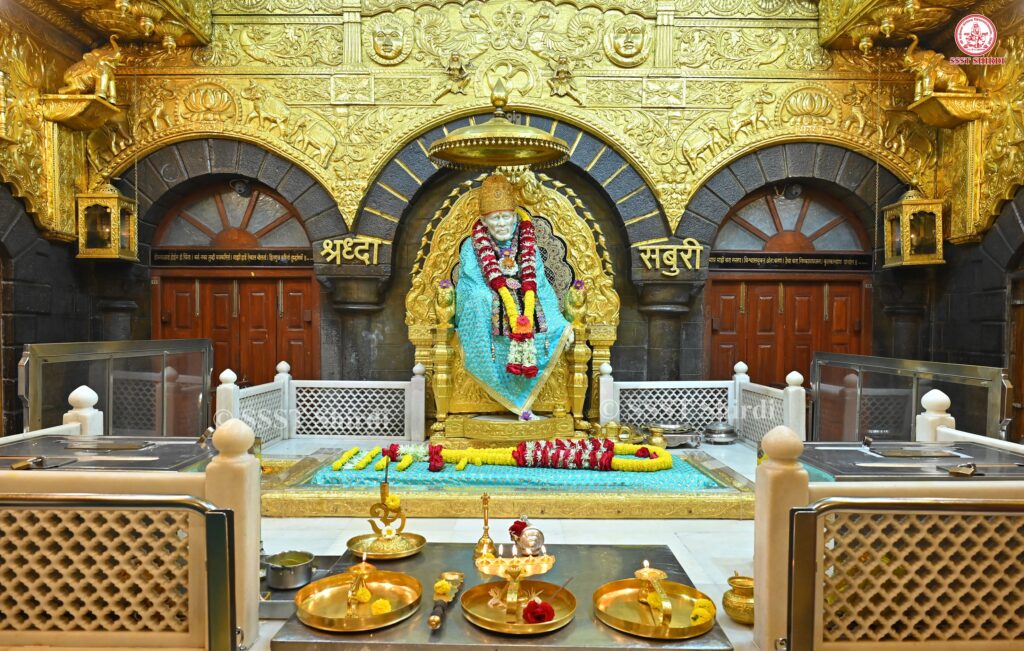
Sai Baba of Shirdi, one of the most revered saints in India, has left a profound and lasting legacy through his teachings, miracles, and the deep devotion he inspired in millions of followers. His life and work transcended the boundaries of religion, and he became a spiritual icon whose influence continues to shape the hearts and minds of people worldwide. This article explores the life, teachings, miracles, and the enduring legacy of Sai Baba, shedding light on his path of spirituality that has touched countless lives.
Early Life and Arrival in Shirdi
Sai Baba’s birth and early life remain shrouded in mystery, as he never spoke about them during his lifetime. While some reports suggest he was born around 1838, others propose a slightly earlier date. He appeared in Shirdi, a small village in Maharashtra, in the late 19th century and spent the majority of his life there. Sai Baba’s arrival in Shirdi marked the beginning of a spiritual journey that would attract people from all walks of life, from rich businessmen to the poorest villagers, all seeking his guidance, blessings, and healing.
Upon his arrival in Shirdi, Sai Baba is said to have spent some time meditating in a neem tree, where he was first noticed by the villagers. His unkempt appearance, the ascetic demeanor, and his mysterious silence left many in awe. However, despite his oddities, there was something extraordinarily magnetic about him that drew people to him.
Many believed that Sai Baba was a Muslim fakir (mystic), while others saw him as a Hindu yogi. This ambiguity about his religious identity played a pivotal role in his message of unity among all religions. In fact, Baba’s life was a beautiful synthesis of Hindu and Muslim traditions, and he often emphasized the need to respect all religions equally.
Sai Baba’s Teachings
At the heart of Sai Baba’s teachings was a message of love, faith, and service to others. While his teachings were simple, they were deeply profound and addressed the core of human suffering, the nature of the divine, and the path to self-realization.
1. Shraddha (Faith) and Saburi (Patience)
Two of the most important values that Sai Baba taught were “Shraddha” (faith) and “Saburi” (patience). These virtues were the foundation of his philosophy and have since become central to the lives of his followers.
- Shraddha (Faith): Baba taught his devotees to have unwavering faith in the divine, even in the face of hardship and adversity. He encouraged his followers to trust that everything happens for a reason, and that the divine, whether through God or a spiritual master, would always guide them through difficult times. Faith, according to Baba, was not merely an intellectual concept but a living practice that should be reflected in every aspect of one’s life.
- Saburi (Patience): The second value, Saburi, is equally important. Baba often said that one must develop patience to endure life’s trials and tribulations. According to him, patience is a necessary quality for any spiritual aspirant, as it allows the devotee to maintain equanimity amidst life’s struggles. Saburi helped devotees navigate through their lives with a calm mind and a trusting heart, waiting for divine timing to unfold.
2. Service to Humanity
Sai Baba was an embodiment of selfless service. He believed that serving humanity was one of the highest forms of spiritual practice. He would often ask his followers to engage in charitable activities and help the less fortunate. This selflessness was an integral part of his spiritual teachings, and he encouraged all his devotees to live a life of service without expecting anything in return. Through his actions, Baba showed that serving others was akin to serving the divine.
3. Unity of All Religions
Perhaps one of the most remarkable aspects of Sai Baba’s life was his message of religious tolerance. Baba’s own background, which blended elements of both Hindu and Muslim traditions, was a reflection of his belief that all religions are paths leading to the same truth. He respected the practices of both Hindus and Muslims, often performing rituals from both traditions. For example, he would light lamps in the mosque, an act typically associated with Hindu temples, while also using the Quran and offering prayers to Allah. Baba was known to say, “Sabka Malik Ek” (“The Lord is one for all”), which succinctly encapsulates his view that the divine transcends religious boundaries.
This unity in diversity made Sai Baba a universal figure who was loved and respected by people of all faiths. He never distinguished between religions and encouraged his followers to adopt the best aspects of each, teaching them to rise above sectarian divisions.
4. Detachment and Renunciation
Sai Baba emphasized the importance of detachment from material possessions and worldly desires. However, his teachings on detachment were not about renouncing the world but rather about maintaining a sense of inner peace while engaging in the world. He believed that true spirituality was not about escaping worldly duties but about performing them with a sense of detachment, remaining unaffected by the ups and downs of life.
He himself lived a life of simplicity and renunciation, often emphasizing that material wealth and fame were fleeting and ultimately unsatisfying. Baba’s focus was on inner purity and contentment, which could only be achieved by detaching oneself from desires and attachments.
Sai Baba’s Miracles
Sai Baba’s miracles played a significant role in shaping his identity and cementing his status as a divine figure. Although Baba never encouraged his devotees to worship him as a miracle worker, his numerous miraculous acts became part of his legacy. These miracles were not just about showing off his supernatural powers but were meant to inspire faith in his devotees and remind them of the omnipresence and omnipotence of the divine.
Some of the most famous miracles attributed to Sai Baba include:
1. Healing Powers
Baba was known to have healing powers, and many devotees who were suffering from physical ailments turned to him for help. His cures were not limited to physical illnesses but also included mental and emotional distress. There are numerous stories of people who were healed after seeking Baba’s blessings, whether through his touch, his words, or his mere presence.
2. Materializing Objects
One of the most well-known miracles of Sai Baba was his ability to materialize objects out of thin air. He would often give his devotees sacred ash (vibhuti), which he would manifest from his palm. This ash was believed to have healing properties, and many devotees attributed their physical and spiritual healing to the vibhuti given by Baba. Baba’s ability to manifest items such as food, coins, and even jewels was widely regarded as a divine manifestation of his power.
3. Divine Knowledge
Sai Baba had a deep understanding of the thoughts and needs of his devotees. It is said that he could read minds and often responded to questions or concerns before his devotees even asked. Many people who visited Shirdi for the first time were astonished when Baba would address their personal problems without them saying a word. Baba’s ability to know the innermost thoughts of his followers further reinforced his status as a divine being.
4. Levitating and Controlling Nature
Another famous miracle was Baba’s ability to levitate and control natural forces. Devotees often reported seeing Baba in a trance-like state, during which he would appear to rise off the ground or enter a deep state of meditation that transcended normal human consciousness. Baba’s control over nature was also seen in instances where he would calm storms or make the weather favorable for his devotees.
The Role of Sai Baba in Shirdi
Sai Baba made Shirdi his home, and the village became a center for spiritual seekers from all parts of India and even abroad. Before Baba’s arrival, Shirdi was a small and largely unremarkable village, but under Baba’s presence, it transformed into a bustling hub of spiritual activity. Devotees would come to Shirdi to seek blessings, solace, and guidance from Baba.
In Shirdi, Sai Baba’s life revolved around his simple yet profound spiritual practices. He would spend hours in meditation, prayer, and performing selfless acts of service. Baba also maintained a simple lifestyle, living in a small room with minimal possessions. Despite his simplicity, the respect he commanded from his followers was immense. People would bring offerings, food, and other gifts, but Baba would distribute them to those in need, further demonstrating his focus on service.
Baba’s mosque, known as Dwarkamai, became the focal point of his activities. Here, Baba would meet his devotees, engage in conversations, distribute food, and perform various miracles. The mosque was also the site of Baba’s final resting place, where his tomb continues to draw millions of devotees every year.
The Legacy of Sai Baba
Sai Baba of Shirdi passed away on October 15, 1918, leaving behind an immense legacy that continues to inspire and uplift people across the world. His followers, who numbered in the millions during his lifetime, have only grown in number since his passing. The core of Sai Baba’s message—love, compassion, selfless service, and devotion to God—remains as relevant today as it was during his lifetime.
Sai Baba’s devotees established various temples dedicated to him, and the Sai Baba Temple in Shirdi remains one of the most visited pilgrimage sites in India. The teachings of Sai Baba, which transcend religious and cultural boundaries, continue to inspire people to lead lives of faith, devotion, and service.
Global Impact
Sai Baba’s impact is not limited to India. His teachings have found followers across the globe, with temples dedicated to him in various countries, including the United States, the United Kingdom, Australia, and several countries in the Middle East and Asia. His message of unity, love, and peace resonates with people of all faiths and backgrounds.
Sai Baba’s universal appeal is rooted in his simple yet profound message that God resides within each person and that the divine is accessible to all who seek it with sincerity and devotion.
Conclusion
Sai Baba of Shirdi was not just a saint; he was a spiritual teacher, a guide, and a healer whose life and teachings continue to inspire millions. His message of love, faith, patience, and unity among all religions remains relevant today. Through his miracles, his selfless service, and his universal teachings, Sai Baba touched the lives of countless individuals, and his legacy lives on in the hearts of his devotees.
His life is a testament to the transformative power of devotion, selflessness, and spiritual practice. Sai Baba’s influence is not confined to the physical realm of Shirdi but extends far beyond, inspiring people across the globe to live lives of greater compassion, service, and inner peace.